
Marrakech offers net rental yields of between 6 % and 8 %. The property market in Marrakech is driven by sustained rental demand, a favourable tax regime for non-residents and a strong events calendar, including the 2030 World Cup. For French investors, it is a destination that combines quality of life, return on investment and market stability.
In this article, we cover everything: the best neighbourhoods, tax implications, the buying process and letting management. With real figures and practical advice.
Why invest in property in Marrakech in 2026?
Marrakech in 2026 is a city undergoing rapid change. With over 4 million visitors a year, growing airport capacity and plans for a high-speed rail link to Casablanca. Foreign investors are well aware of this: the ‘ochre city’ is one of the most dynamic property destinations in the Mediterranean region.
Profitability and rental yields in Marrakech in 2026
A rental investment in Marrakech generates a net yield of between 6 % and 8 %. This is well above European standards. Service charges remain low. The municipal services tax is calculated on the rental value and has a limited impact. The Moroccan tax authorities apply a flat-rate allowance of 40 % on gross property income, which significantly reduces the taxable base.
To assess net profitability, we use the Larcher method: this treats three months’ rent as equivalent to annual service charges. It is a conservative estimate that provides a realistic picture of the return on investment. Small two-bedroom properties in the Medina or Guéliz often outperform larger properties in terms of yield.
The catalytic effect of the 2030 World Cup and major infrastructure projects
The 2030 World Cup is already driving up accommodation prices. Bookings point to an influx of millions of visitors over short periods. Marrakech-Menara Airport is increasing its capacity to 12 million passengers. The high-speed rail link will soon connect Marrakech to Casablanca, boosting the value of outlying areas. Investors entering the market now stand to benefit from favourable price trends before the market adjusts.
“What we’re seeing in Marrakesh is that demand for rental accommodation shows no sign of slowing down. Even in the low season, well-located and well-managed properties maintain solid occupancy rates. The city has a level of appeal that is rare in North Africa.”
Claire Emeriau, co-founder of Klair & Arno
The best neighbourhoods for investing in property in Marrakech
Choosing the right neighbourhood is the first step in your project. Each area has its own type of property, tenant profile and price range. Here are the four key areas for a rental investment in Marrakech.
Medina: historic riads and the luxury of authenticity
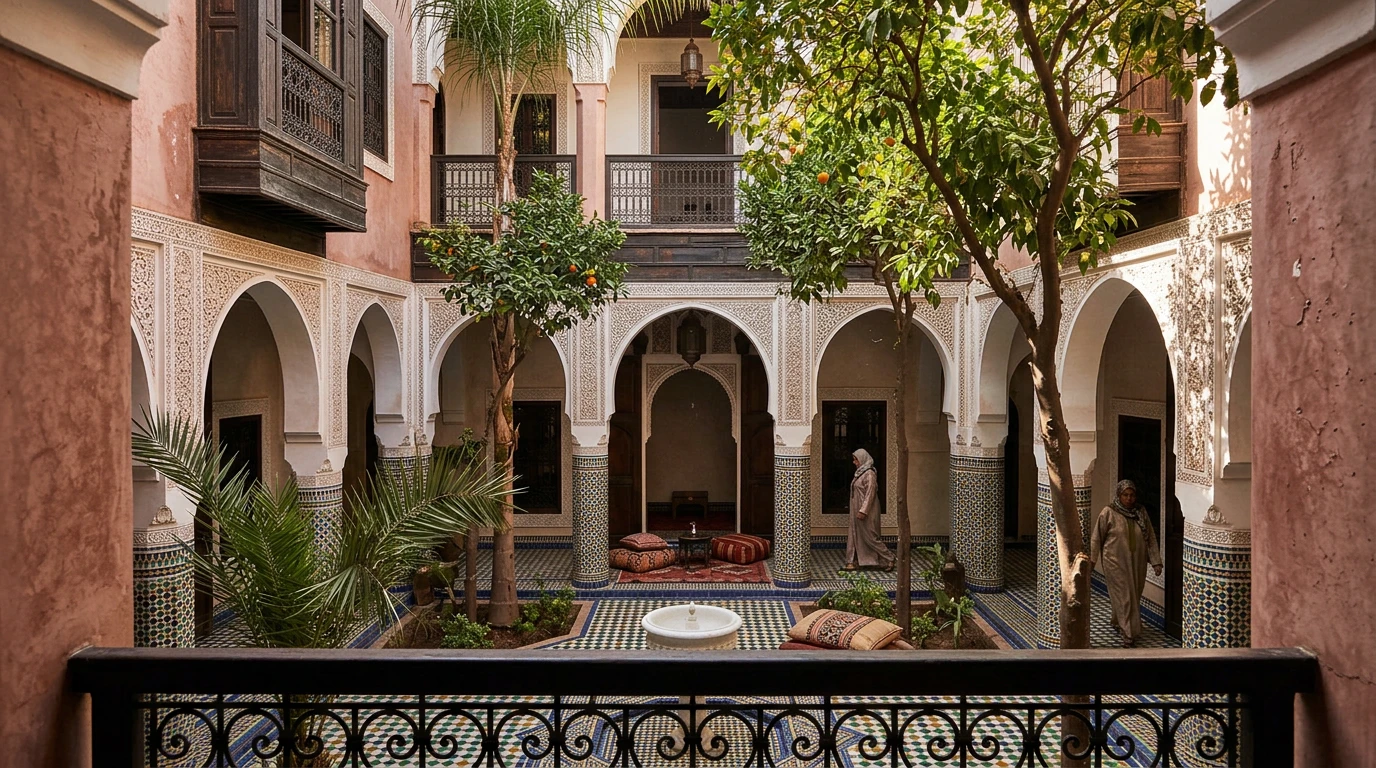
The Medina is home to the historic riads most sought after by those who love an authentic way of life. The Mouassine and Dar el Bacha districts remain the favourites amongst luxury property buyers. The 17th-century architecture, the bustling souks nearby and the UNESCO-listed monuments: all these factors underpin long-term demand for tourist rentals.
A private riad is different from a guesthouse. Running it as a business requires specific licences. The price per square metre varies depending on vehicle access and the condition of the walls. A tree-lined patio with a swimming pool immediately increases the property’s value for short-term lettings. See our guide on Shopping in the Medina of Marrakesh for further details.
Guéliz, Hivernage and Palmeraie: three investment profiles for investors
Guéliz is the neighbourhood for expats and digital nomads. Modern flats with lifts and secure car parks are in high demand for long-term rentals. L’Hivernage remains the most expensive area, attracting a VIP clientele and benefiting from its proximity to luxury hotels and casinos. La Palmeraie, meanwhile, caters to affluent families and golfers. The luxury villas there command high prices but offer genuine long-term value.
| Neighbourhood | Type of property | Average price per square metre | Tenant profile |
| Medina | Traditional riad | €1,500 – €3,000 per square metre | Tourists, history enthusiasts |
| Gueliz | Modern flat | €2,000 – €2,500 per square metre | Executives, city dwellers, digital nomads |
| Wintering | Luxury flat | €3,000 – €3,500 per square metre | VIPs, expats, high-end clientele |
| Palm grove | Luxury villa | €4,000 – €5,000 per square metre | Well-off families, golfers |
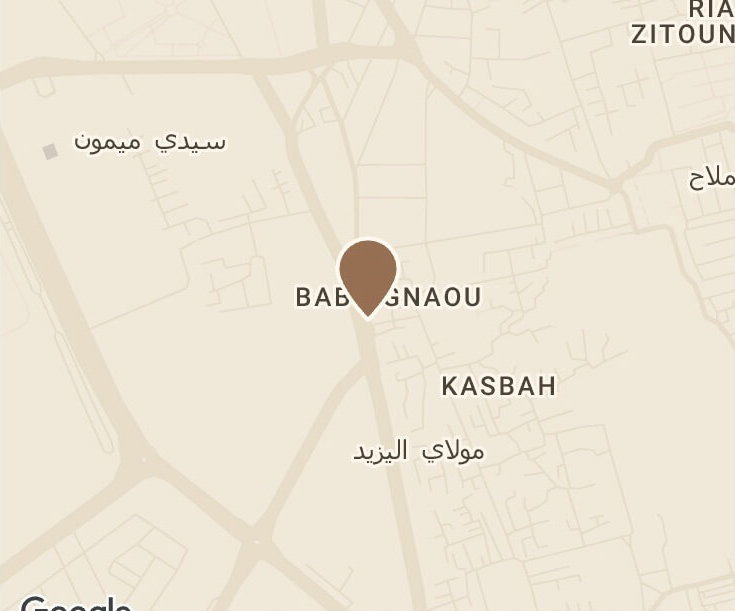
The Ourika Road, the area around the Kasbah and the new golf estates (Fès Road, Amelkis) are expanding the market beyond the city walls. These areas offer larger properties at prices that remain affordable for investors seeking space and character.
Good to knowCasablanca or Marrakech? Casablanca offers a stable yield of 4 to 5 %, driven by long-term business lettings. Marrakech offers 6 to 8 % thanks to tourism and short-term seasonal lettings. If your aim is maximum return, Marrakech is the obvious choice. If your priority is stability and zero vacancy, Casablanca has its advantages.
Taxation and buying property in Marrakech: what foreign investors need to know
Morocco’s tax system is one of the key advantages of investing in property in Marrakech. Here are the key points.
Tax allowances, exemptions and double taxation
The Moroccan tax authorities apply a deduction of 40 % from gross property income. The taxable base is therefore significantly reduced. For new-build properties, you are entitled to a full exemption from council tax for five years. If the property is used as your main residence for six years, you are fully exempt from capital gains tax.
The Franco-Moroccan tax treaty prevents double taxation on rental income. Double taxation is one of the main obstacles that investors fear: it does not exist here. Consult a chartered accountant to optimise your tax position in line with your circumstances.
Repatriation of funds and the role of the convertible dirham account
To invest safely in Marrakech, the first step is to open an account in convertible dirhams with a Moroccan bank. Declaring your investment to the Foreign Exchange Office guarantees your right to repatriate your rental income and any capital gains should you sell the property. The Moroccan bank plays a key role in this process. The currency exchange must be documented: keep the receipt in a safe place.
Good to knowCosts to expect for a rental investment in Marrakech: 4 % in registration fees, 1.5 % in land registry fees, ~1 % in notary fees and approximately 3,000 DHS in out-of-pocket expenses. Total budget: 6 % to 7 % of the purchase price. Details can be found in our article on notary fees in Morocco.
Ensuring a secure purchase: title deeds, solicitors and pitfalls to avoid
A successful rental investment starts with a secure purchase. Here are the non-negotiable points.
Land title vs Melkia: the choice that determines everything
The land title is definitive and indisputable. It is the only solid guarantee of ownership in Morocco. Melkia customary law, on the other hand, carries risks of family disputes and unclear boundaries that can prevent a resale. We strongly advise against purchasing property under the Melkia system for non-resident foreign investors. This is one of the most common pitfalls we see in the market.
A land registry check is essential. A surveyor must confirm the exact boundaries of the plot before the preliminary sale agreement is signed. Our guide to Pitfalls of buying property in Morocco covers these points in detail.
The role of the notary in buying property in Marrakech
Allow for approximately 6 % of the sale price to cover all purchase costs. The solicitor collects these sums and ensures the legal validity of the transaction. Their fees are regulated at between 0.5 % and 1 %. From the preliminary sale agreement to the final deed, the process takes around one month. The keys are handed over once full payment has been made.
“Our standard advice to all investors who come to us is this: check the title deed first and foremost. There can be no compromise on this point. A property without a clear title deed is a problem for letting management and a major stumbling block should it come to resale.”
Claire Emeriau, co-founder of Klair & Arno
Remote property management: long-term, short-term and luxury concierge services
Once you have purchased the property, how you manage it is key to your profitability. There are two models in Marrakech: long-term lettings and short-term lettings.
Long-term vs short-term letting: which management option should you choose?
Long-term lettings appeal to investors who prioritise stability and minimal vacancy rates. They are aimed at expatriates, executives on secondment or families living in Marrakech. Guéliz is the ideal neighbourhood for this type of letting: demand there remains steady all year round, even outside the tourist season.
Short-term lettings, on the other hand, generate a higher return but require more active management. Platforms such as Airbnb and Booking account for the majority of listings. A high-quality guest reception service can increase the average rate per night by 25 %. This is where a high-end concierge service really comes into its own.
Remote concierge and wealth management services for investors
Delegated management is the ideal solution for non-resident investors. A specialist agency handles guest reception, maintenance, the swimming pool, marketing and advertising. Remote property management requires a diligent manager who oversees preventive maintenance and optimises the occupancy rate. A good local property hunter can also help you identify the best opportunities before they appear on public websites.
Our property management service supports non-resident property owners throughout their project. You can also find our riad profitability calculator to estimate your actual return based on the type of property and the neighbourhood.
Renovating luxury riads: budget, tradespeople and compliance
Renovating a luxury riad in Marrakech requires craftsmen specialising in tadelakt and zellige. You’ll need to set aside a substantial budget to incorporate air conditioning and home automation without compromising the property’s authenticity. A ‘Non-Agricultural Use’ permit is mandatory for building on land on the outskirts of the city. For renovations in the Medina, UNESCO authorisations must be obtained. Our guide on the renovation of a riad in Marrakech explains each step in detail.
Investing in property in Marrakech: pitfalls and mistakes to avoid
Investing in Marrakech offers great potential. However, like any foreign market, it has its own specific characteristics. Here are the key points foreign investors should bear in mind.
Common pitfalls and practical experience
Buying without checking the title deed is the number one pitfall. Next comes underestimating acquisition costs (6 to 7 % on top of the purchase price). You should factor in rental vacancies during the low season when drawing up your budget, particularly for short-term lets. Finally, neglecting to manage your online presence (listings, reviews) can cost you several percentage points in occupancy rates.
First-hand experience makes all the difference. An investor who visits the property, meets the solicitor and understands the local market makes better decisions than a buyer acting remotely on the basis of adverts. Take the time to visit the property before committing yourself.
Market stability and long-term prospects for foreign investors
Marrakech offers a level of market stability that is rare in the region. The city has been attracting international buyers for the past twenty years. Prices have risen steadily and gradually, without any speculative bubbles. For foreign investors, the legal framework is clear, high-end properties are liquid, and there is genuine potential for capital gains on resale.
For a successful rental investment in Marrakech, it is best to seek the support of an agency that knows the local market, the right tradespeople and the neighbourhoods that are outperforming the rest. Take a look at our properties available for purchase or our guide to the’Buying property in Morocco for French nationals.
Conclusion: your rental investment project in Marrakech
Marrakech offers all the right conditions for an attractive property market for foreign investors: yields of 6 to 8 %, a favourable tax regime, strong rental demand and legal stability. Choosing the right neighbourhood, securing clear title to the property and ensuring high-quality rental management are the three pillars of a successful investment.
Are you planning a rental investment project in Marrakech? Get in touch – we’ll support you every step of the way, from finding a property to managing it.
FAQ: Rental property investment in Marrakech
How profitable is renting out a property in Marrakech?
Net yields range from 6 % to 8 %, depending on the neighbourhood and the type of property. Smaller properties in the Medina and Guéliz often outperform larger ones. The Larcher method provides a reliable, conservative estimate. Our riad profitability calculator provides you with a detailed quote based on your project.
What are the benefits of investing in property in Marrakech?
High returns, favourable tax treatment (40 % allowance on property income, 5-year exemption from council tax on new-build properties), the Franco-Moroccan double taxation agreement, a guarantee of repatriation of funds, a stable market and sustained rental demand. Marrakech offers a rare combination of advantages for an overseas property investment.
Which neighbourhoods offer the best return on investment in Marrakech?
The Medina for riads available for short-term lets (high returns but more hands-on management). Guéliz for stable long-term lets with consistent demand from expatriates. L’Hivernage for luxury and high-end clients. La Palmeraie for prestigious villas and golfers. See our guide to the neighbourhoods of Marrakesh to choose from.
Casablanca or Marrakesh: which city should you rent in?
Casablanca offers a yield of 4 to 5 % with virtually no vacancy, focusing on long-term business lettings. Marrakech offers 6 to 8 % thanks to tourism. For a rental investment that maximises return on investment, Marrakech is the obvious choice. Casablanca’s stability is an advantage for investors who are averse to the risks associated with seasonal lettings.
What costs should you expect when investing in a rental property in Marrakech?
6 to 7 % of the purchase price in acquisition costs (registration fees 4 %, land registry fees 1.5 %, notary’s fees ~1 %, out-of-pocket expenses 3,000 DHS). Add mortgage fees if you are financing the purchase with a loan (0.5–1.5 % of the amount borrowed). Our article on the notary fees in Morocco sets out each item in detail.
What type of property should you choose for a rental investment in Marrakech?
A riad in the Medina for short-term holiday lets. A flat in Guéliz or Hivernage for long-term lets. A luxury villa in Palmeraie for a high-end property investment. It is also possible to combine the two strategies, depending on the time of year. The type of property must be suited to your investment objectives and your budget.
How can I manage my property from a distance?
Outsourcing management to a high-end concierge service is the solution for non-resident investors. It handles guest reception, the swimming pool, cleaning, marketing and advertising. A high-quality service increases the average rate per night by 25 % and ensures a consistent guest experience to maintain positive reviews. Our property management service is available to non-resident owners.