Key points to remember : The Kasbah remains the heart of power and imperial history in Marrakech. By exploring his monuments such as Tombs The Saadians or the Palace In El Badi, you’ll find yourself immersed in a unique architectural heritage. This fortified quarter offers a peaceful atmosphere, ideal for savouring the local cuisine away from the hustle and bustle of the medina.
Founded in 1185, the royal citadel still houses the sovereign’s residence behind its rammed-earth ramparts. Yet one often ends up getting lost in the crowds of the medina of Marrakesh without ever experiencing the serenity of the Kasbah of Marrakech.
So we’ve put together this guide to help you explore this location steeped in history, where imperial lifestyle meets the authenticity of the artisanal alleyways.
Why the Kasbah remains the historic heart of Marrakech
Founded in 1185 by the Almohads, the Kasbah is home to prestigious mausoleums, the Moulay El Yazid Mosque and the El Badi Palace. This fortified royal quarter is a showcase of adobe architecture and the legacy of the dynasties that shaped the imperial city. It is here, in the Kasbah of Marrakech, that the heart of the city beats.
The legacy of the Almohad and Saadian dynasties
Abu Bakr ibn Omar founded Marrakesh around 1070: the site initially served as a strategic military encampment, before imperial expansion began. A century later, Yaʿqub al-Mansur launched major construction projects between 1185 and 1190 and built the royal citadel, transforming the entire southern part of the city.
The Saadian dynasty then took over and embellished the district in the sixteenth century. It is to them that we owe the splendour of the Saadian mausoleums and the former glory of the El Badi Palace, two monuments that epitomise the golden age of the Kasbah and an entire imperial culture.
Earthen architecture and a role as a royal citadel
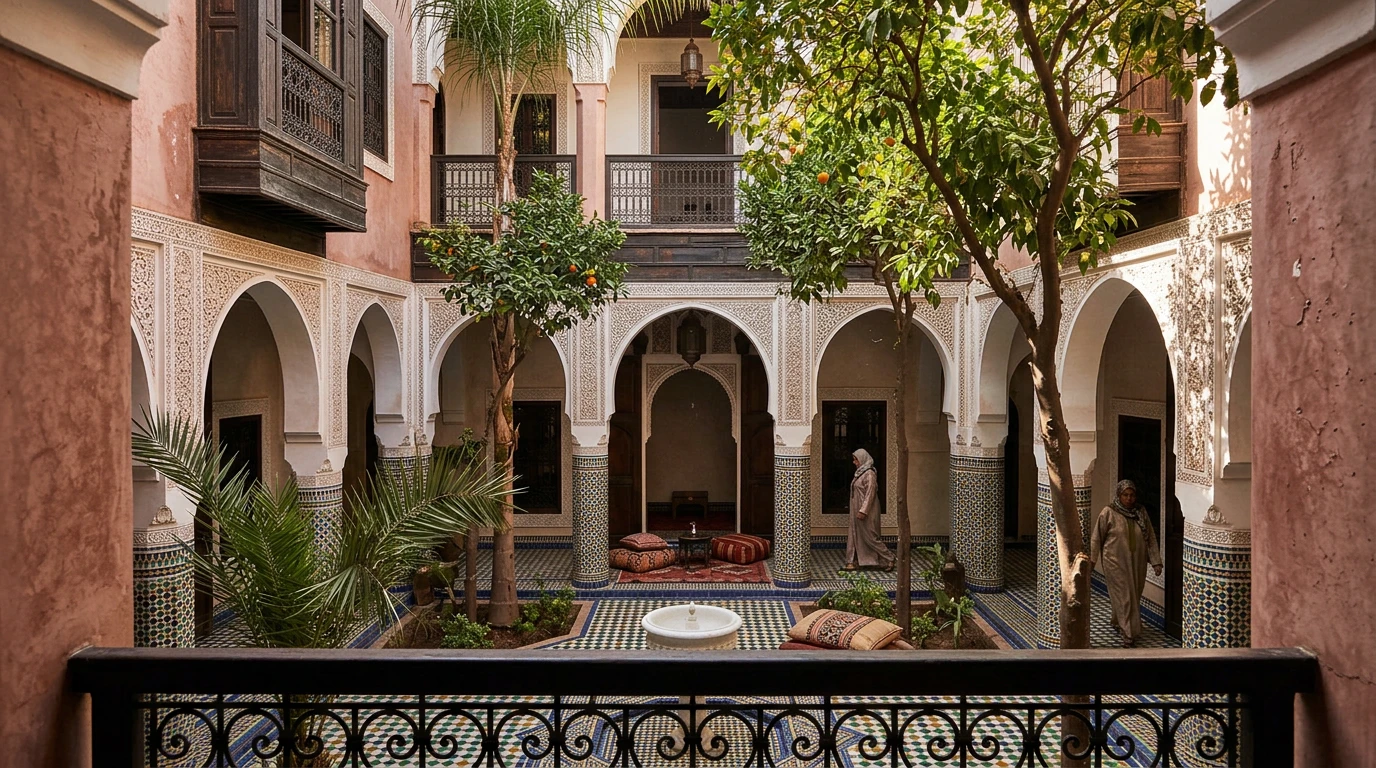
Ramparts are mainly constructed from rammed earth: this compacted earth, typical of southern Morocco, provides natural thermal regulation. Behind the deliberately austere walls lie colourful zellige tiles, carved woodwork and light-filled patios. The contrast is striking.
The Kasbah functioned as a veritable city within a city, with its markets, bakeries and mosque, separated from the medina by its walls. Even today, the Dar al-Makhzen palace plays an active political role there: it is the seat of power, and this royal presence ensures a safety a permanent and serene atmosphere.
The iconic monuments of the Kasbah
Now that the political foundations have been laid, it is time to turn to the buildings themselves. Four monuments embody the imperial grandeur of the Kasbah of Marrakesh.
Bab Agnaou and the Moulay El Yazid Mosque
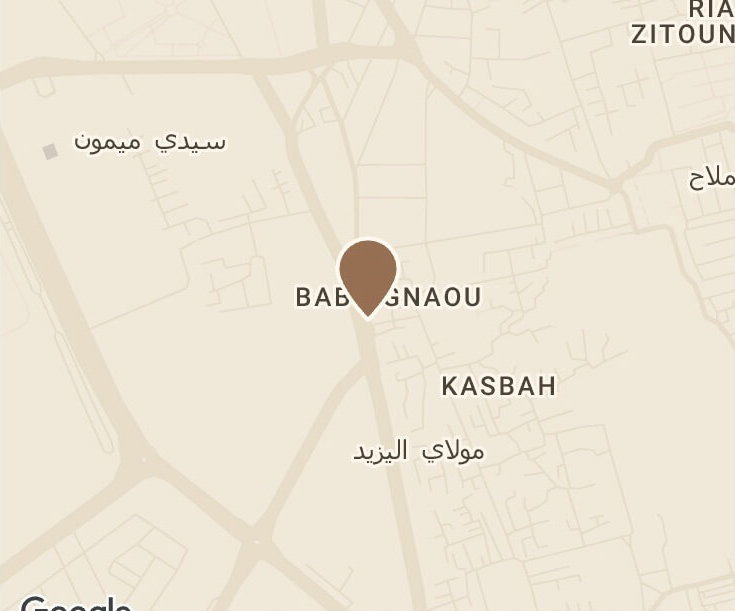
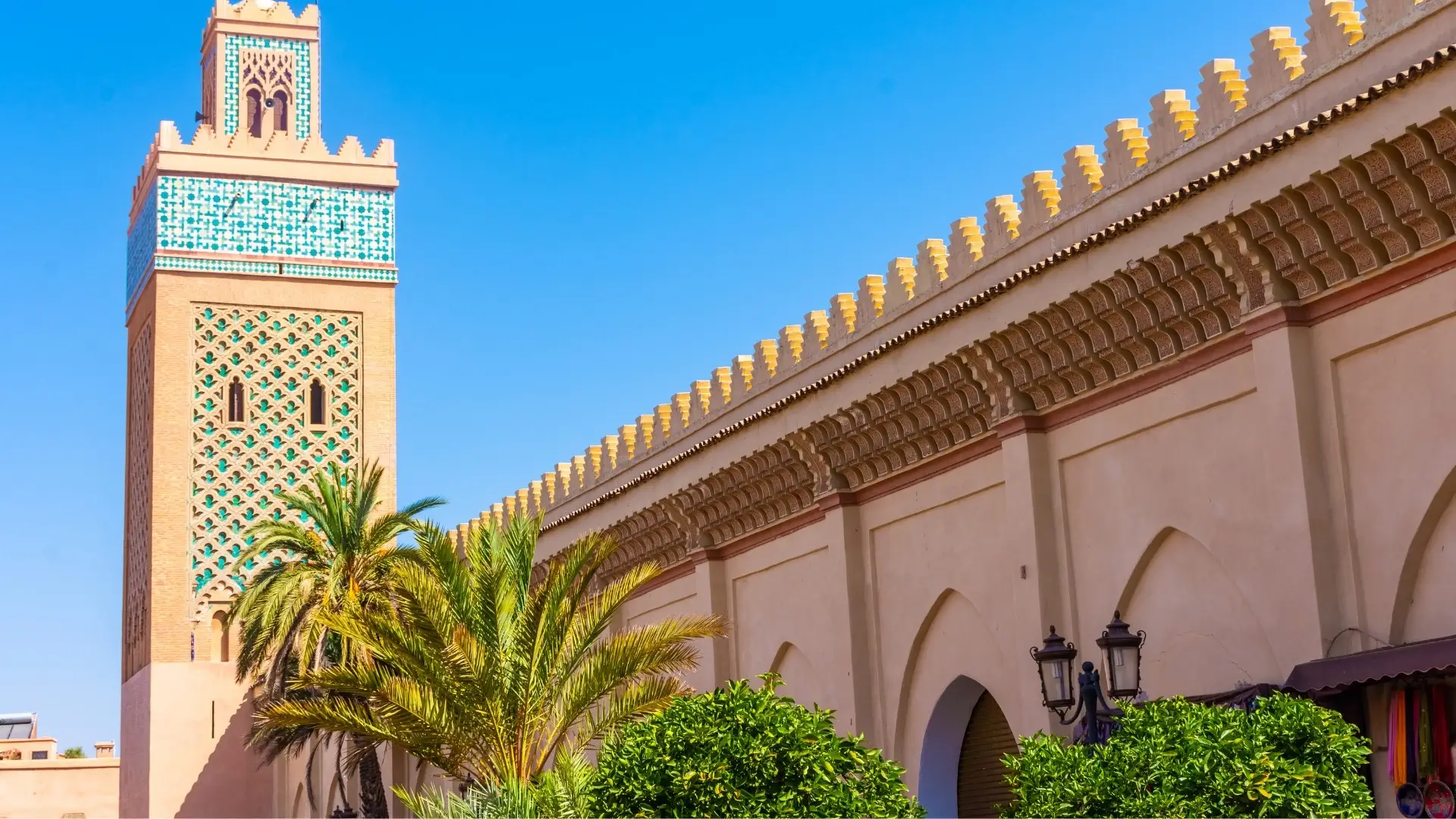
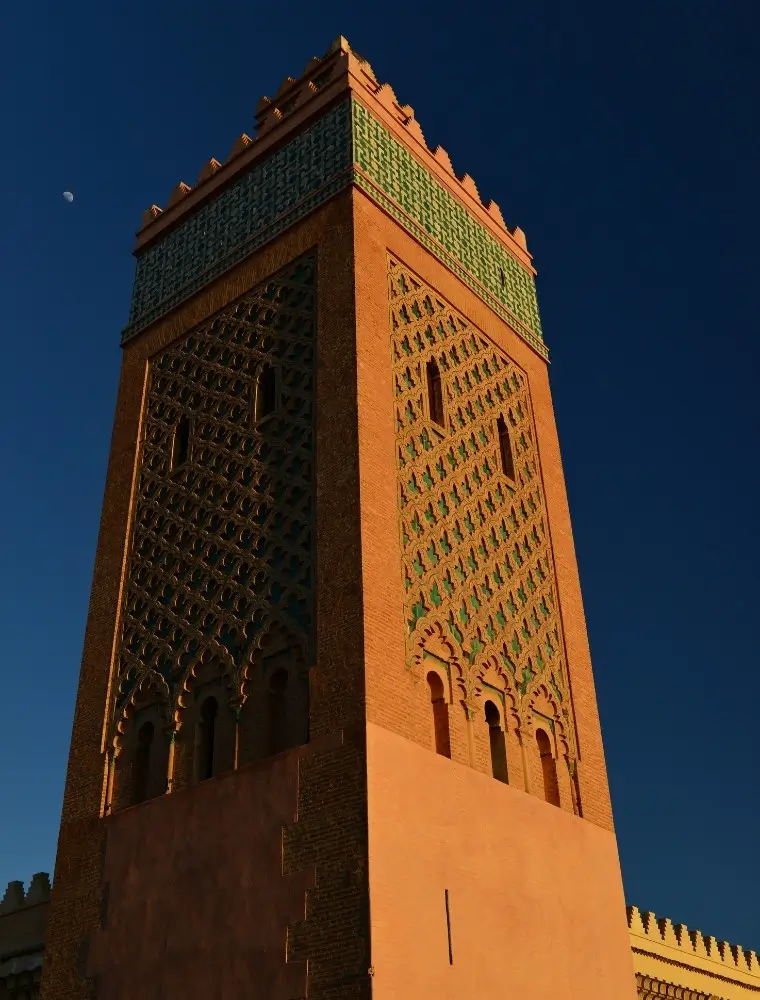
Bab Agnaou is striking for its bluish stone, which Guéliz : this monumental gate marked the entrance to the citadel and symbolised the strength of Almohad power. Right next to it, the Moulay El Yazid Mosque dominates the neighbourhood with its minaret adorned with green zellige tiles. It remains the spiritual heart of the Kasbah: it is the neighbourhood’s historic grand mosque, which comes alive at Friday prayers.
The Saadian Tombs and El Badi Palace
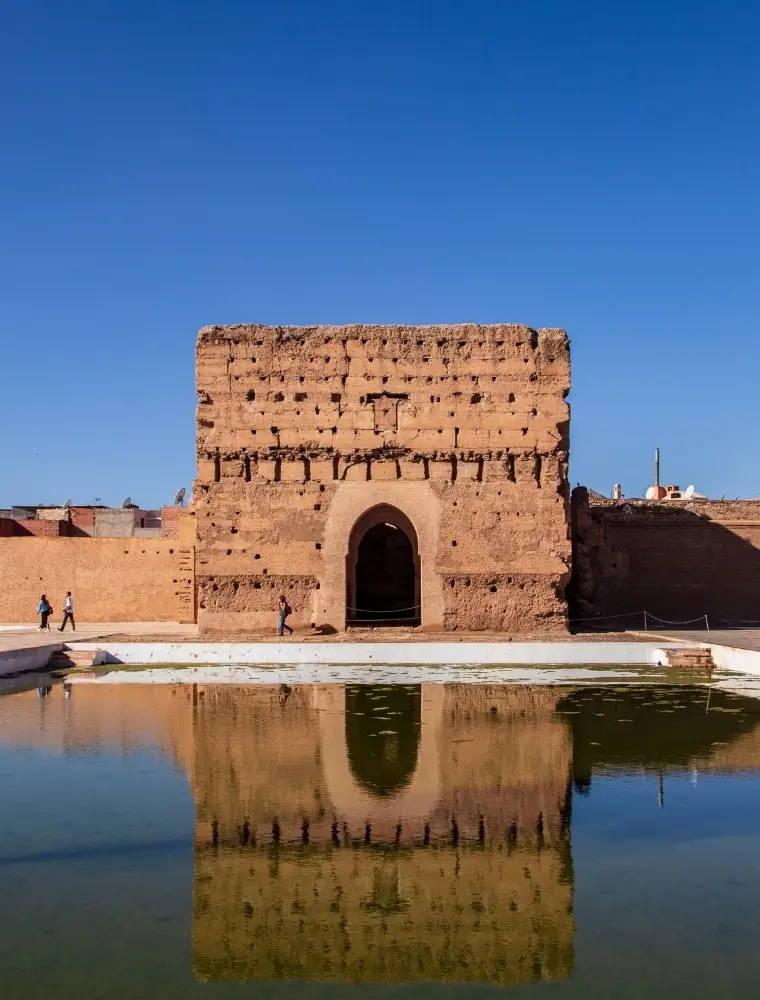
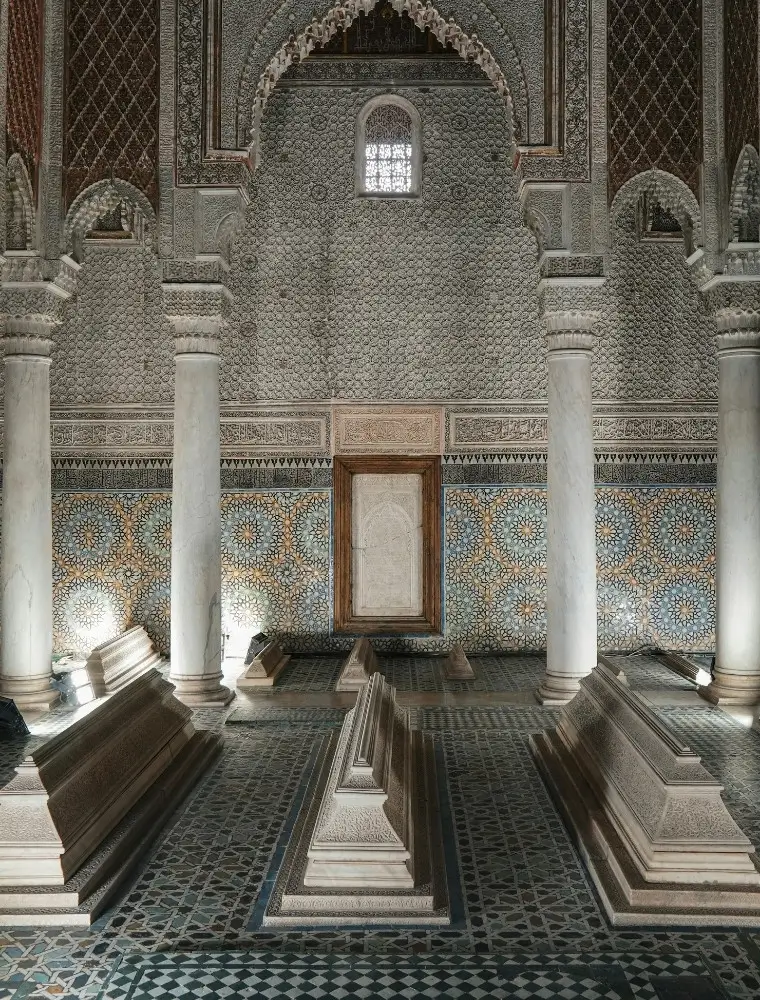
The Saadian Tombs are a testament to extreme refinement: the Hall of the Twelve Columns, with its Carrara marble and intricately carved stucco, leaves visitors speechless. A few steps away, the El Badi Palace displays its grandiose ruins. Ahmed al-Mansur had adorned it with gold and crystal; today, storks nest on its high adobe walls and the vast empty courtyard takes the visitor’s breath away.
The fact that the tombs have been preserved intact stands in stark contrast to the ruins of the palace. Time has transformed the splendour of the Saadian era into a silence steeped in memory, and this unfinished palace remains one of the most moving in Marrakech.
Soak up the authentic atmosphere of the narrow streets: souks and local cuisine
Beyond the stone walls, the Kasbah has a more peaceful atmosphere than the rest of the Red City. Here you can find unique items, fine pottery and Berber rugs in intimate souks, without the hustle and bustle of the larger markets in the medina. For more information, see our Guide to the souks of Marrakech.
When it comes to dining, don’t miss the saffron-infused tagines and the famous Marrakesh-style tanjia. The stalls near the mosque serve home-style cooking, whilst the terraces with panoramic views offer a glimpse of the Agdal Gardens or the Atlas Mountains. This cuisine is an integral part of neighbourhood life.
Strolling around here is a real immersion in Marrakesh culture. Far from the hustle and bustle, in stark contrast to the gardens of the palm grove of Marrakech, the neighbourhood has a rare sense of authenticity.
For more ideas, take a look at our suggestions for Things to do in Marrakech.
Staying in a riad or a luxury villa in the Kasbah
To make the experience even more immersive, the choice of accommodation matters. The refurbishment The riads and luxury villas showcase a precious heritage: tadelakt, carved cedar and discreet technology. These villas and residences preserve the Moroccan spirit whilst offering contemporary comfort.
At the heart of the Kasbah, the patio remains the focal point: this inner courtyard with a water feature provides a cool, private retreat. Discover our selection of exceptional riads, designed as a bespoke experience, a far cry from standard hotel offerings. It’s a different side to luxury in Marrakech.
Practical tips for a stress-free stay
We recommend exploring on foot: the narrow alleyways, often closed to traffic, reveal hidden details. Visit the sites as soon as they open, between 8.30am and 10am, to enjoy the peaceful light before the crowds arrive. And don’t forget that the Kasbah in Marrakech contains private royal areas that must be respected.
Good to know : Most of the sites in the Kasbah open around 9am. If you arrive early, you can enjoy the narrow streets and courtyards without the crowds, and catch the best light for your photos.
With its imperial citadel and laid-back atmosphere, the Kasbah district promises a truly unique getaway. Explore its palaces and narrow streets before the crowds arrive: your next stay in a riad will turn these legends into an unforgettable experience.
«The Kasbah is our favourite neighbourhood in Marrakech: you can feel the history at every turn, in a tranquillity you won’t find anywhere else in the medina.»
- Arnaud Duysens, co-founder of Klair & Arno
FAQ
What is the Kasbah of Marrakech?
This is the fortified royal quarter of Marrakech, founded in 1185 by the Almohads. The heart of power for centuries, it is still home to the King’s residence (Dar al-Makhzen) as well as treasures such as the Saadian Tombs and El Badi Palace. The Kasbah is, in short, the historic soul of the imperial city.
What is the difference between a souk and a kasbah?
A souk is a market, a commercial area where crafts, spices and textiles are sold. A kasbah, on the other hand, is a fortified citadel used for both military and residential purposes. In Marrakech, the Kasbah also has its own small markets, which are quieter than those in the medina.
What is there to do in the Kasbah district of Marrakech?
Visit the famous Saadian Tombs, El Badi Palace, Bab Agnaou and the Moulay El Yazid Mosque, then browse the artisans’ workshops. Finish with a mint tea or a tagine on a terrace with panoramic views: it’s a wonderful immersion in the Marrakesh way of life.
What is the difference between a riad and a kasbah?
A riad is a traditional house built around an inner courtyard, many of which have now been converted into charming guesthouses. A kasbah, on the other hand, refers to a much larger fortified complex. You can stay in a riad located within the Kasbah district and enjoy the best of both worlds.