In brief: The medina of Marrakech, a historic fortified quarter listed as a UNESCO World Heritage Site since 1985, is home to around ten major monuments, from the Koutoubia to the Saadian Tombs, which should be prioritised according to the time available and the visitor’s interests.
What’s there to see in the medina of Marrakech? Our selection at a glance
This question inevitably comes up for anyone planning a visit to the medina of Marrakech: what should you see in the Marrakech medina, and in what order? The answer can be summed up in a single sentence: prioritise the Koutoubia Mosque, the Bahia Palace, the Saadian Tombs, the Ben Youssef Madrasa, the El Badi Palace and the city walls including Bab Agnaou, before venturing off to more off-the-beaten-track spots.
The medina refers to the historic fortified quarter of Marrakech, surrounded by ramparts stretching for nearly 19 kilometres, built in the 12th century during the Almoravid dynasty. This area contains almost all of the city’s UNESCO heritage sites: narrow alleyways, souks in the medina, where palaces, mosques and madrasas stand side by side within an area of just a few square kilometres.
Ten iconic monuments and sites have been selected here, organised according to a simple principle: first, the most visited sites, which generally charge an admission fee (Koutoubia, Bahia, the Saadian Tombs, Medersa Ben Youssef, El Badi, the city walls), followed by free or lesser-known attractions to discover whilst strolling through the narrow streets.
Our selection criteria
This selection of Marrakech historic monuments does not claim to be exhaustive; rather, it focuses on relevance. Three criteria have guided the selection: proven historical significance, effective accessibility to the public (opening hours, ticketing, religious restrictions), and the architectural richness of the site, whether this be zellige tiles, sculpted stucco or monumental proportions.
Some more modest features – a neighbourhood fountain, an Almoravid koubba, an unassuming cemetery – are nevertheless included in this guide. Their interest lies less in their grandeur than in what they reveal about the urban fabric of the medina and the daily life that once unfolded there.
The order of presentation is based on the sites’ popularity and visitor numbers, rather than a geographical route. A visitor in a hurry may therefore stick to the first few sections, whilst those with several days to spare would be well advised to read through the whole guide before making a decision.
Good to know
The opening times and admission prices for the monuments in the medina change regularly, particularly during Ramadan or the peak tourist seasons. The practical information in this guide, which is up to date as of 2026, should be checked with the local ticket offices before your visit.
The Koutoubia: why does this minaret remain the highlight of any visit?
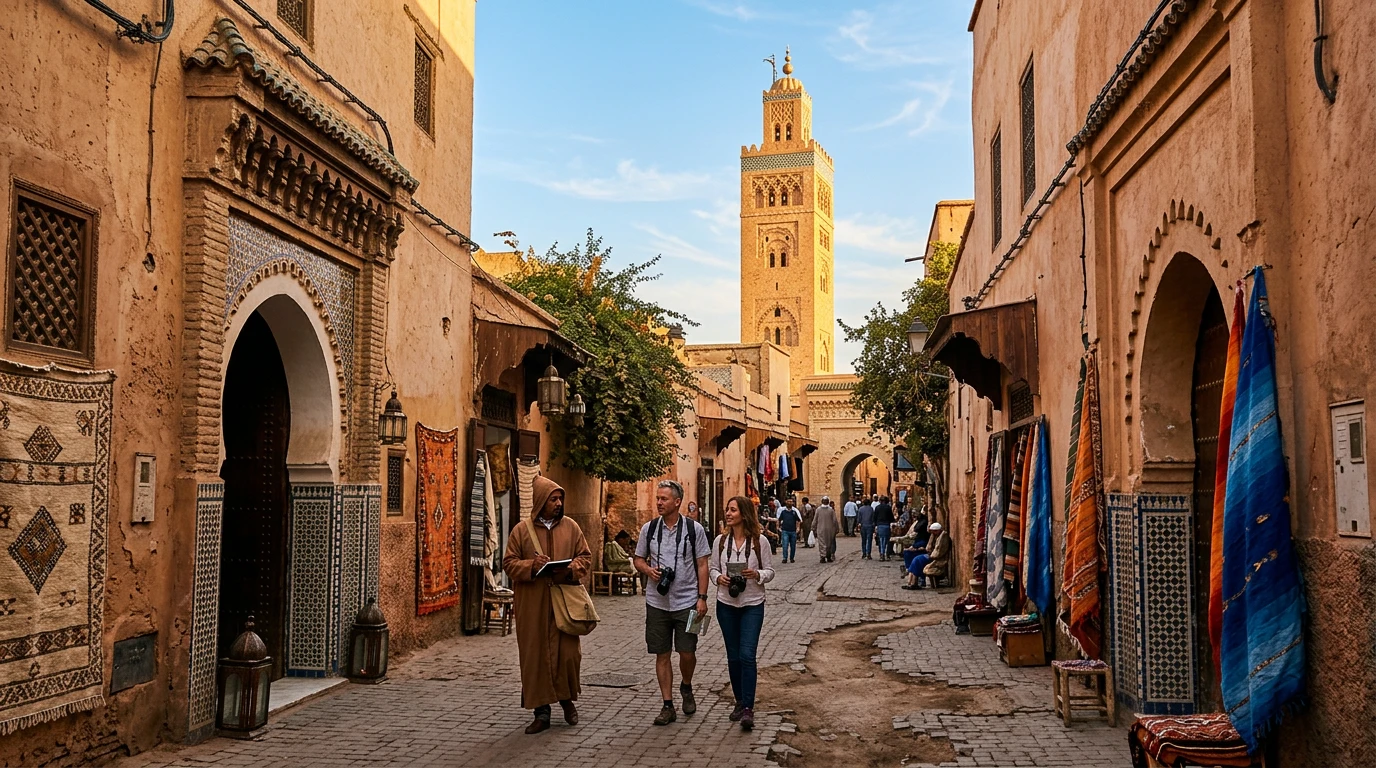
The Koutoubia is a mosque featuring a 77-metre-high minaret, built in the 12th century during the reign of the Almohad dynasty, and which has remained the tallest religious building in the medina ever since. It dominates the skyline of Marrakech and serves as a visual landmark throughout the medina: wherever you are in the narrow streets, its ochre-coloured minaret helps you find your bearings.
- Key strengths: exceptional Almohad architecture, a silhouette visible from almost every part of the medina, and surrounding gardens perfect for contemplation.
- Note that: Entry to the mosque is restricted to practising Muslims. Non-Muslim visitors may admire the building from the outside and the gardens surrounding it.
- Who is it for?: a must-see for every visitor, even if you can’t go inside. A top priority, ideally at sunset when the ochre stone takes on a golden hue.
When you’re there, I always recommend starting a tour of the medina at the Koutoubia – not for the interior, which is off-limits to non-Muslims, but to get a sense of the visual landmark it provides. Once you’ve mentally committed that minaret to memory, you won’t really get lost in the narrow streets anymore.
Arnaud Duysens
The Bahia Palace, the jewel of the 19th century
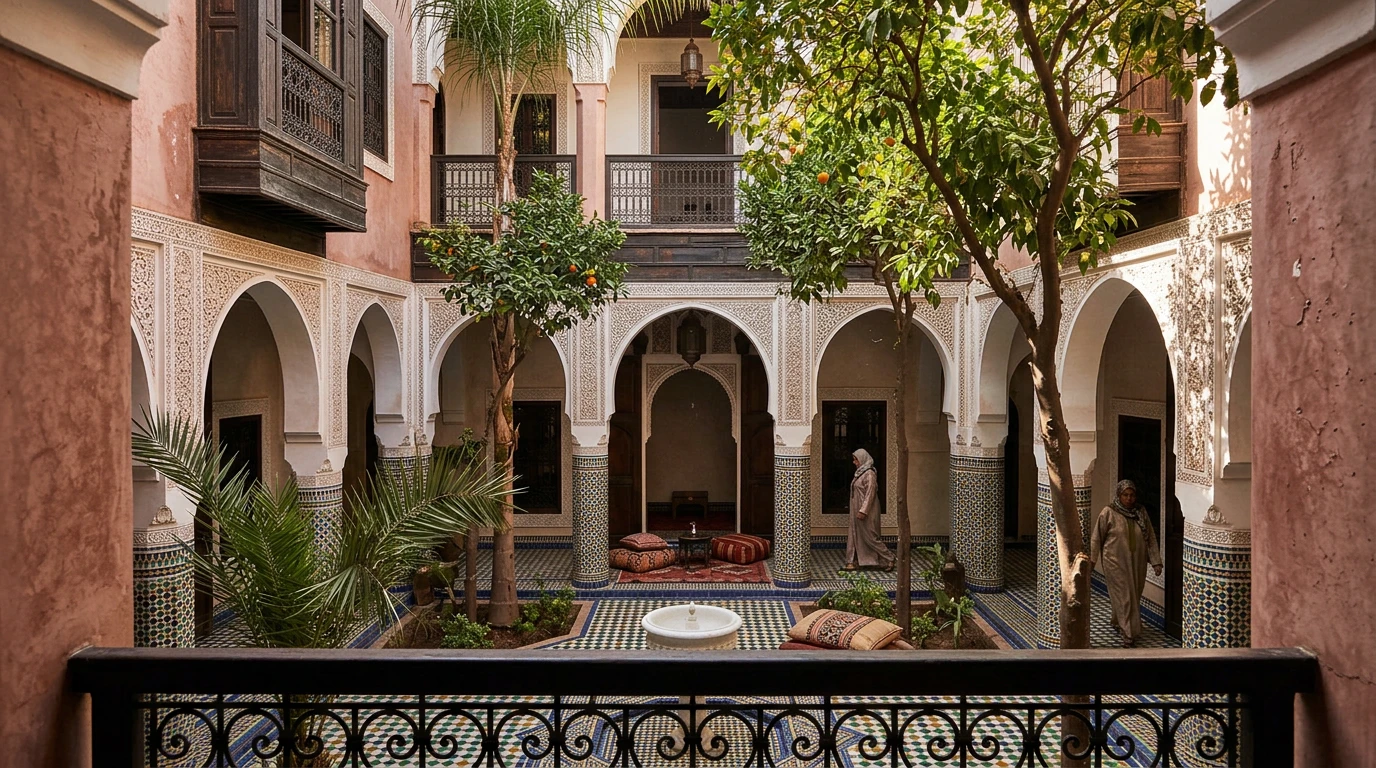
Built in the 19th century for the Grand Vizier Si Moussa, the Bahia Palace owes its name – which literally means «Palace of the Beautiful» – to the decorative ambition of its successive patrons. Its labyrinthine layout of inner courtyards and lush gardens makes it one of the best-preserved examples of Moroccan civil architecture.
- Key strengths: a series of patios, gardens planted with orange trees and jasmine, rooms decorated with zellige tiles, intricate stucco work and carved wooden ceiling panels.
- Note that: The sheer scale of the palace often takes visitors by surprise. Allow about an hour to fully appreciate the variety of rooms on a complete tour.
- Who is it for?: lovers of Moroccan architecture and traditional interior design, as well as photographers drawn to the filtered light of the patios.
The Saadian Tombs, a royal cemetery rediscovered in 1917
The Saadian Tombs form a royal cemetery of the Saadian dynasty dating from the 16th century. Long walled up and forgotten, they were not rediscovered until 1917 – some three centuries after their construction – which explains their remarkable state of preservation compared with other remains from the same period. According to the archives of the Inspector-General of Historic Monuments at the time, this belated rediscovery largely accounts for the site’s exceptional preservation in the face of the ravages of time.
- Key strengths: the main mausoleum, adorned with mosaics, stucco and marble, nestled amidst peaceful gardens where court servants are also laid to rest.
- Note that: Access is via a narrow passageway. It can get quite busy at midday, so it’s best to visit in the morning.
- Who is it for?: those with a passion for dynastic history and exquisite craftsmanship, who appreciate the symbolic significance of a place that has remained sealed off for centuries.
The Ben Youssef Madrasa, one of the largest Koranic schools in the Maghreb
Founded in the 14th century and subsequently renovated in the 16th century, the Ben Youssef Madrasa was one of the largest Koranic schools in the Maghreb. Its central courtyard, surrounded by students’ cells spread over several levels, bears witness to the vibrancy of intellectual life that characterised the medina.
- Key strengths: a décor featuring geometric zellige tiles, chiselled stucco and carved cedar wood, with a central pool forming the focal point of the patio.
- Note that: Unlike the Koutoubia, the madrasa is open to the public, including non-Muslims, making it a great alternative for experiencing Moroccan religious architecture at close quarters.
- Who is it for?: those who wish to understand the educational and spiritual history of the medina, beyond its purely tourist aspect.
El Badi Palace, a reminder of Saadian power
Built at the end of the 16th century by Sultan Ahmed al-Mansur, the El Badi Palace commemorates the Saadian victory over the Portuguese. According to contemporary chronicles, at its height it comprised 360 rooms adorned with gold, marble and precious stones, a splendour which led to some of its materials being dismantled by subsequent dynasties as early as the 17th century.
- Key strengths: the monumental scale of the central courtyard, the sunken ponds and gardens, as seen from the remaining ramparts.
- Note that: most of the original décor has disappeared. A visit here is therefore more about the archaeology of power than about admiring the décor.
- Who is it for?: visitors who are more interested in military history and the splendour of the Moroccan dynasties than in the physical preservation of the sites.
The ramparts of Marrakech and Bab Agnaou, the historic gates of the medina
The ramparts of Marrakech were built in the 12th century during the Almoravid dynasty and stretch for nearly 19 kilometres, marking out the exact boundaries of the present-day medina. They are pierced by monumental gates known as babs, some of which are still in regular use.
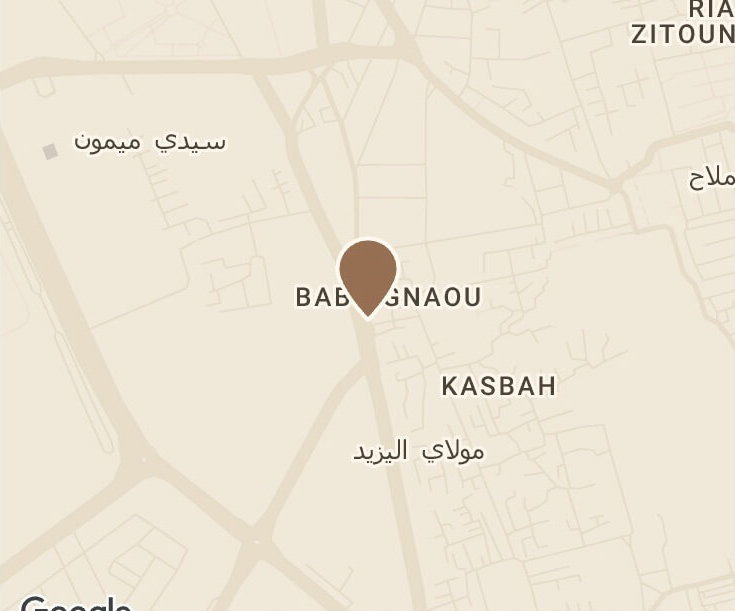
Bab Agnaou is the most iconic gate in this complex and is a must-see when entering the medina from the newer districts of Marrakech. Its carved decoration, more refined than that of the other defensive gates, makes it an almost unmissable stop for anyone interested in the UNESCO World Heritage Site Marrakech.
The main gates (babs)
- Bab Agnaou: the most ornate monumental gateway, near the Kasbah.
- Other babs are scattered along the 19-kilometre-long ramparts, which still today form the backbone of the traffic routes leading to the souks of the medina.
Who is it for?: a route that most visitors take sooner or later; it’s worth taking a look at whilst exploring the medina. Entry is free and no booking is required.
The key figure
19 kilometres: this is the length of the Almoravid ramparts that have encircled the medina since the 12th century, a perimeter that has remained virtually unchanged for eight centuries and which continues to define the boundaries of the UNESCO World Heritage Site Marrakech.
These six sites – the Koutoubia, the Bahia Palace, the Saadian Tombs, the Ben Youssef Madrasa, the El Badi Palace and the city walls including Bab Agnaou – cover most of what a visitor planning their first trip to the medina will want to see. The table below summarises the key historical and practical information before moving on to some of the less well-known sites.
| Monument | Century | Dynasty | Type | Access |
|---|---|---|---|---|
| Koutoubia Mosque | 12th century | Almohads | Mosque | Outdoor seating is free; indoor seating is reserved for Muslims |
| Bahia Palace | 19th century | Not specified | Palace | Paid |
| Saadian Tombs | 16th century | Saadians | Royal Cemetery | Paid |
| Ben Youssef Madrasa | 14th–16th centuries | Not specified | Qur’anic school | Paid |
| El Badi Palace | Late 16th century | Saadians | Palace | Paid |
| City Walls and Bab Agnaou | 12th century | Almoravids | Fortifications | Free |
Miaâra Cemetery, Koubba Ba’adiyn and other must-see sites
As well as the six main sites, the medina is home to some more low-key spots that are well worth a visit for those with time to spare. The Miaâra cemetery is one such example: this historic site is rarely included on standard tours, yet it offers a glimpse into the city’s funerary traditions that is seldom revealed to visitors in a hurry.
The Koubba Ba’adiyn is one of the few Almoravid architectural remains still visible in Marrakech, also dating from the 12th century. Its apparent simplicity – a single dome – contrasts with its documentary value: it provides direct evidence of the style that preceded the Almohad period.
As for Dar Bellarj, this former maternity hospital that has been converted into a cultural centre rounds off this list of off-the-beaten-track venues. Its unique history illustrates a little-known aspect of the social organisation of the old medina.
- Who is it for?: curious visitors keen to get off the beaten track, who usually have at least one full day to spend there.
Historic fountains: Chrob or Chouf and Mouassine
The Chrob or Chouf fountain, whose name literally means «drink and look», stands in an alleyway in the souks of the medina. Its décor, featuring carved wood and zellige tiles, serves as a reminder that it was once used both as a drinking trough for animals and as a water source for passers-by.
The Mouassine fountain, set within a former working-class neighbourhood of the medina, rounds off this modest yet revealing heritage trail. These fountains bore witness to how the inhabitants were supplied with water before the advent of modern water networks, and shaped social organisation around communal water points.
- Who is it for?: something to discover whilst strolling through the souks; there’s no specific route to follow. Entry is free and the visit takes just a few minutes.
Watch out
Unlike the major attractions that charge an entrance fee, the fountains and koubbas are not always clearly signposted. A detailed map of the medina is still useful for finding them without wasting time in the maze of souks.
Which monument should you choose, depending on your preferences and the time you have available?
It all depends, first and foremost, on the time available, and then on the nature of the interest in the UNESCO World Heritage Site at Marrakech. Three profiles come up most frequently in our discussions with travellers planning their visit to the medina of Marrakech.
- Quick tour (half a day): Koutoubia, the Bahia Palace and Bab Agnaou. These three sites, which are close to one another and quick to visit, cover the main sights of the medina.
- History enthusiasts: the Saadian Tombs, El Badi Palace and the Ben Youssef Madrasa. This complex traces several centuries of power, from the Ben Youssef Madrasa to the Saadian Tombs.
- A tour off the beaten track: Koubba Ba’adiyn, the Miaâra cemetery and the fountains in the Mouassine neighbourhood. This route takes a little longer but offers a more detailed insight into the urban fabric.
Whichever approach you choose, there are two practical tips that always apply: aim for the morning, before 10 am, to avoid the heat and the crowds around the most popular monuments; and ensure you wear clothing that covers your shoulders and knees, as required when visiting religious sites such as the Koutoubia and the Ben Youssef Madrasa.
In the travel guides we provide, the most common mistake is trying to see everything in a single day. It’s better to choose three or four sights and take the time to explore them properly, rather than ticking off ten items on a list without really looking at them.
Arnaud Duysens
Visiting the medina of Marrakech is therefore not simply a matter of taking stock of its historic monuments. It involves striking a balance between the time available, the nature of one’s interest in heritage, and the ability to linger long enough at each site to appreciate its character, rather than simply adding it to a list.
FAQ
What is there to see in the medina of Marrakech?
The medina of Marrakech, a historic fortified quarter listed as a UNESCO World Heritage Site since 1985, is primarily visited for the Koutoubia, the Bahia Palace, the Saadian Tombs, the Ben Youssef Madrasa, the El Badi Palace and the city walls, including Bab Agnaou. These six sites encapsulate the bulk of the historical and architectural heritage open to the public.
What are the most iconic landmarks in Marrakech?
The Koutoubia and its 77-metre minaret, built in the 12th century under the Almohads, remains the most iconic monument in Marrakech, visible from almost anywhere in the medina. The Bahia Palace and the Saadian Tombs, rediscovered in 1917, complete this trio of must-see attractions.
Which is the best neighbourhood in the Marrakech medina?
Strictly speaking, there isn’t a single ‘best’ neighbourhood in the medina, but rather areas with distinct atmospheres: the area around the Koutoubia Mosque is home to most of the major monuments, whilst the Mouassine district, with its historic fountains, offers a more down-to-earth and less touristy atmosphere.
What are some things to do in the medina of Marrakech?
As well as visiting the historic monuments Marrakech, the medina is the perfect place to wander through the souks, discover ancient fountains such as Chrob, Chouf and Mouassine, and enjoy cultural stops at repurposed venues such as Dar Bellarj.
What is the difference between a souk and a medina?
The medina refers to the entire historic fortified quarter of a Moroccan city, including the ramparts, whilst the souk is a market or a group of markets located within this medina. In Marrakech, the souks of the medina occupy part of the urban area bounded by the 19 kilometres of Almoravid ramparts.
What are the 10 must-see sights in the medina of Marrakech?
Our selection includes the Koutoubia, the Bahia Palace, the Saadian Tombs, the Ben Youssef Madrasa, the El Badi Palace, the city walls including Bab Agnaou, the Miaâra Cemetery, the Koubba Ba’adiyn, Dar Bellarj and the Chrob or Chouf and Mouassine fountains, presented in order of prominence rather than geographical route.